

Beyond the Booth: How the BRIC® GEN2 Bused Simplifies Power Distribution Architecture
Published by Chief Enterprises on Apr 30th 2026
Over a month after Work Truck Week (WTW) and one theme still stands out to us. Power distribution is becoming more complex, not less.
As electrical systems scale, OEMs are supporting higher loads, tighter packaging requirements, and faster integration timelines. Traditional approaches that rely on external busing, jumper wires, and manual splices introduce additional components, variability, and risk into the vehicle.
The Shift to Internal Busing
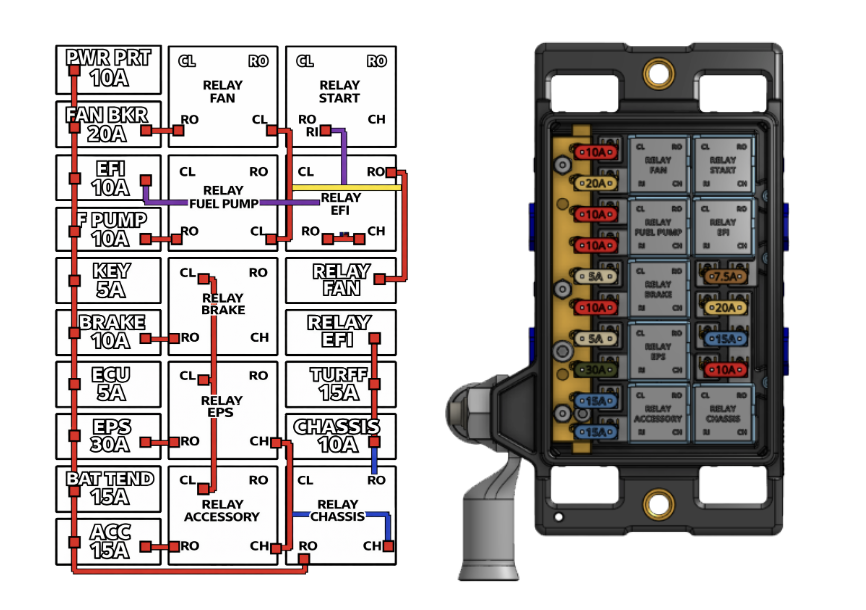
The BRIC GEN2 Bused builds on the BRIC (Breathable & Robust Interconnection Center) platform by including internal busing within a sealed module, ensuring a more consolidated and controlled solution.
Rather than building distribution externally, engineers can configure power routing inside the module, using stamped busbars and jumper configurations tailored to the application. This approach:
- Reduces the need for costly external splices and wire lead jumpers
- Supports flexible fuse and relay layouts
- Maintains full rear accessibility for service
Real Impact on System Design
The benefit is not only a cleaner design, but a measurable impact. In our standard configuration example, internal busing reduced wire leads by over 50%. Compared to a custom PCB-style module, this lowered development time, labor costs, and the risk of wire damage or thermal events.
By shifting the complexity away from the harness towards the inside of a module, systems become easier to duplicate and assemble with more consistency across builds.
Built for Flexible, High-Load Applications
The bused solution is particularly well-suited for applications where:
- Space constraints limit the use of distributed components
- Electrical systems require centralized power management
- Environmental exposure demands sealed protection
- Build efficiency and repeatability are critical
Common use cases include construction, agriculture, specialty vehicles, and work trucks where durability and system simplicity are essential. Configurations can be adapted to support circuit layouts, custom labeling (laser etching or mylar), and plug-and-play harness integration allowing engineers to balance standardization with application-specific design requirements.
Moving Towards Smarter Systems
As conversations from WTW continue, one thing is crystal clear. Power distribution is no longer about component selection, but about system efficiency. Solutions like our BRIC GEN2 Bused help shift that approach by reducing complexity at the source, enabling cleaner designs, and faster integration.
Learn more about our bused solution.